Ranking All 50 States by Measurements of Arts Vibrancy for 2025
Published January 8, 2026
For the third consecutive year, SMU DataArts offers a comprehensive look at how arts and culture thrive across all 50 states. While the 2025 rankings show overall stability—with New York maintaining its #1 position for the third year running—Connecticut's rise to #3 in the rankings demonstrates how dynamic a state's creative ecosystem can be.
Using a rigorous, data-driven methodology, we measure vibrancy through indicators of arts supply, demand, and public support, while adjusting for cost of living and population size. These rankings provide a snapshot of where creative ecosystems are strongest and reveal emerging patterns in how states support and sustain arts and culture.
Most states moved only a few positions from 2024, reinforcing patterns observed in previous years: states with high arts vibrancy often feature dense urban populations and lower poverty rates, though notable exceptions persist. New York, for example, continues to lead the nation despite a higher-than-average poverty rate. Meanwhile, states from every region of the country populate the top 20 list, underscoring that vibrant arts and culture isn’t limited to any one part of the country.
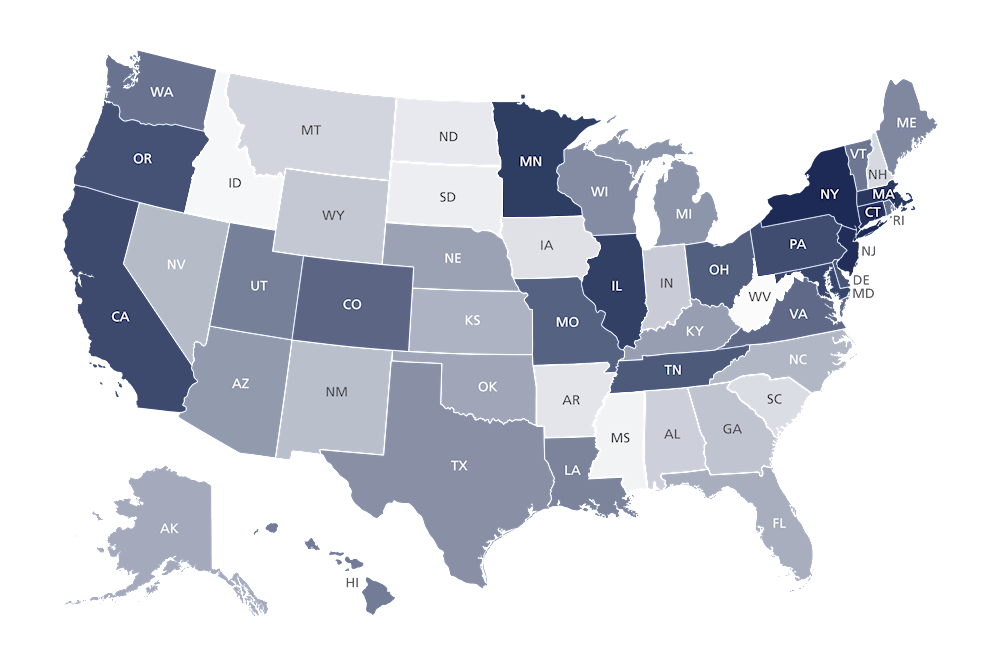
- New York
- New Jersey
- Connecticut
- Massachusetts
- Minnesota
- Illinois
- Maryland
- California
- Pennsylvania
- Oregon
- Delaware
- Tennessee
- Ohio
- Missouri
- Colorado
- Virginia
- Rhode Island
- Washington
- Vermont
- Hawaii
- Utah
- Louisiana
- Maine
- Wisconsin
- Texas
- Michigan
- Arizona
- Kentucky
- Nebraska
- Oklahoma
- Alaska
- Florida
- Kansas
- North Carolina
- Nevada
- New Mexico
- Georgia
- Wyoming
- Indiana
- Alabama
- Montana
- New Hampshire
- South Carolina
- Iowa
- Arkansas
- North Dakota
- South Dakota
- Mississippi
- Idaho
- West Virginia
Dive into the details on measurements that drive cultural vitality.
Highlights from the Analysis
Connecticut’s Historic Jump
Connecticut made the largest leap of any state, climbing 18 spots from #21 in 2024 to #3 in 2025, making it the highest ranked state in New England. While changes from year to year in the index can be hard to isolate to one single factor, this rise is likely due to a mix of increased data availability from several sources and growth within aspects of arts ecosystem itself.
New York Remains on Top
For the third consecutive year, New York claims the #1 spot, reaffirming its position as the nation’s cultural powerhouse.
Northeast Prominence
Four of the top five states hail from the Northeast:
- #1 New York
- #2 New Jersey
- #3 Connecticut
- #4 Massachusetts
Midwestern Staying Power
Two Midwestern states maintain their top 10 status for the third year running:
- #5 Minnesota
- #6 Illinois
West Coast Representation
The West Coast continues to shine, with California (#8) and Oregon (#10) securing spots in the top 10 for the third consecutive year.
Other Notable Mentions
- Pennsylvania (#9) and Delaware (#11) both held their rankings
- Colorado (#15) maintains its third straight year in the top 15.
These state rankings tell an important story about policy, funding, and cultural infrastructure. But arts vibrancy plays out at the community level—where residents and visitors experience museums, theatres, and cultural events firsthand. When viewed together, the state and community data reveal fascinating patterns.
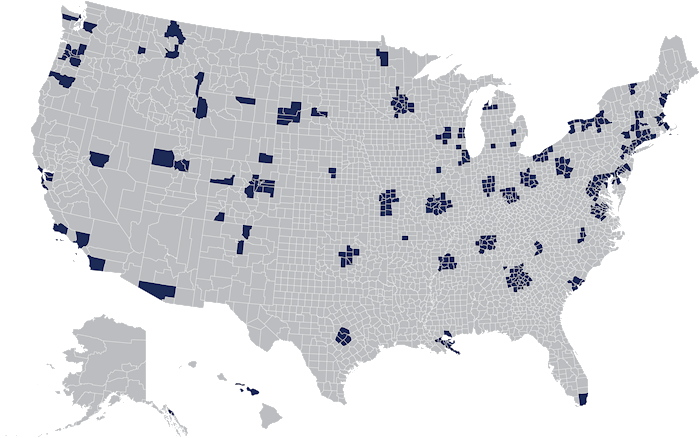
New York leads in both measures, claiming the #1 state ranking and boasting nine communities in the top 100—more than any other state. California follows closely with seven top 100 communities, led by San Francisco-San Mateo-Redwood City at #2.
But some states punch far above their weight. South Dakota ranks #47 among states, yet claims three communities in the top 100—Rapid City, Pierre, and Spearfish. Similarly, Utah ranks #21 as a state but its highest-ranked community, Salt Lake City doesn’t break the top 40, illustrating how state-level metrics don’t always predict local arts ecosystems.
These patterns and disparities highlight how vibrant arts communities can persevere and flourish through strong local leadership, philanthropic support, and grassroots cultural engagement—even when broader state conditions are less favorable.
The Top 100 Most Arts-Vibrant Communities of 2025
This year marks the tenth edition of SMU DataArts’ Arts Vibrancy Index with a unified and expanded list that reflects the reality that vibrant arts and culture can flourish anywhere across the nation—from small mountain towns to major metropolitan areas.
About Arts Vibrancy
Arts vibrancy measures the health and vitality of arts and culture ecosystems across communities. We assess community vibrancy using a data-driven approach, relying on data available in all U.S. communities to eliminate the influence of opinion or geographically limited data on the final results.
The vibrancy assessment consists of rubrics covering aspects of supply, demand, and public support for arts and culture. Values are adjusted on a per capita basis and differences in cost of living are accounted for to level the playing field as much as possible.
Why These Rankings Matter
These rankings help:
-
Policymakers identify opportunities to strengthen cultural infrastructure
-
Arts organizations understand their competitive landscape and advocate for resources
-
Communities benchmark their progress and learn from peer states
-
Researchers and funders track trends in arts ecosystem development
Communications Toolkit
Our complimentary and easy-to-use communications toolkit offers a customizable press release and creative assets to help spread the word about arts vibrancy in your town, city, and/or state. View the Toolkit